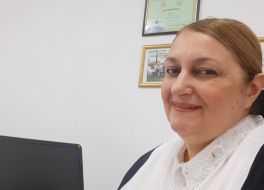
Nana Apkhaidze
Civil law · Criminal defence
Talking to a lawyer in a country whose legal system you do not know is unsettling. Most foreigners worry about two things: paying for advice they did not need, and failing to explain their situation well enough - sometimes across a language barrier - to get a useful answer. Both worries shrink once you know how a consultation is structured: what happens in it, what is free, where billing starts and what you are entitled to ask for at the end.
This page is a client's manual for a legal consultation in Georgia: how to prepare so one conversation gives you the most, which format suits your matter, how attorney-client confidentiality works from the very first minute, and what a good consultation should leave you with - even if you end up not hiring anyone.
Published
A first consultation is a diagnosis. The advocate translates your story into legal terms: which area of law it belongs to, which rules apply, who the other side is in legal terms and what stage things are at right now. Without that step any advice is guesswork, which is why a good advocate spends the first part of the conversation asking questions rather than giving answers.
It is also a mutual assessment. The advocate checks whether they can take your matter and whether there is a conflict of interest; you check whether you understand them, trust them and like the way they work. Nobody is obliged to start working together after the conversation.
When you see „free legal consultation“ advertised online, it is worth asking what exactly is free. Sometimes it is a five-minute call whose only purpose is to book a paid meeting; sometimes it is a generic forum answer that never touches your documents. On this platform the free part has defined content - working out the issue, matching you with the right advocate and that advocate's first assessment - and the table below shows where the line is.
What a consultation is not: representation. Until an engagement agreement is signed, the advocate does not contact anyone on your behalf, does not monitor any deadline and does not file anything. This matters when a deadline is already running: talking to a lawyer does not stop the clock, so if you are told the last day is close, you need to decide quickly.
The rule is simple: everything needed to find out who you need and what it will cost is free; anything where the advocate does real work on your matter is paid.
A prepared client gets twice as many answers in the same time. These steps take about half an hour and work for any format.
Who, what, where, when, and what you want in the end. Facts, not feelings. If it does not fit on one page, you probably have not yet worked out what the core issue is - which is a useful discovery in itself.
When you were served the decision, when you received the dismissal order, when you learned about the damage. An envelope, an email timestamp, a signed receipt - this detail often decides whether anything can be done at all.
Before taking a case the advocate must check that they do not and did not represent the opposing party. For a company, give its identification code; for a person, the full name. This one-minute check protects you from serious trouble later.
Name each file with a date and a short label, such as „2026-03-12 lease agreement“ or „2026-06-01 demand letter“. Georgian-language documents are fine as they are - the advocate reads them. You will then pay for time spent on analysis, not on searching.
A late payment, a document signed without reading, a verbal agreement you now regret. These are the details people hide, and exactly the ones the other side will use. Better the advocate hears them from you than in court.
An assessment only? A document? Full handling of the case? Mentioning a budget is not awkward - it lets the advocate propose a strategy you can actually see through to the end.
The directory lists 5 903 verified advocates. Filter by area of law, city and language, or let the coordinator choose for you.


Choose the format by the nature of the matter, not by convenience. A single question may be settled in five minutes on the phone; a document-heavy dispute needs screen sharing or a table. An online legal consultation from abroad or from another Georgian city is routine practice - here is when each format works best.
Best for emergencies and quick orientation: an arrest, a search, a summons that arrived today, „I am supposed to sign this tomorrow - should I?“. The drawback: the advocate cannot see the document, so the answer is preliminary.
Suits matters where the document is central but its physical original does not need checking. With screen sharing, advocate and client read the same clause at the same time - impossible on a phone call, and a big help when the text is in Georgian.
When there are many original documents, when the matter is emotionally heavy, or when several people need to attend - business partners, for example. Meeting face to face also builds trust faster on a long-running case.
For a specific, narrow question with a document attached: „does this clause let me terminate the contract unilaterally?“. The advantage: the answer stays on record and you can go back to it.
Professional secrecy exists so that clients tell the whole truth. In Georgia it covers what an advocate learns from you in their professional capacity, and no signed agreement is needed for it to apply. Holding facts back on the logic of „I do not know this person yet“ only hurts you: with an incomplete picture you get the wrong advice.
Know the limits as well. Confidentiality protects your communication with the advocate; it does not erase a fact or a document that exists elsewhere. A contract you show your advocate is also in the other party's hands and may end up in the case file. Nor is confidentiality a tool for planning to break the law - an advocate will refuse such a request.
A practical tip: bringing third parties to the consultation - a friend, a relative, a relocation agent - can weaken confidentiality, because whatever is said in their presence is known to them too. If you genuinely need an interpreter or a family member there, tell the advocate in advance. The Coalition Legal coordinator only sees a short description of the issue; the details are for the advocate.
For general orientation, yes - you can describe the issue without giving your name. But the advocate needs the parties' names to check for conflicts of interest, and specific advice on a specific case is only possible after that.
No. The free part creates no obligation. If the approach or the offer does not suit you, tell the coordinator and you will be matched with another candidate.
Entirely. On a complex or expensive case a second opinion is sensible. Just be open with both that you are comparing options - professionals take that in their stride.
The advice rests on what you tell the advocate. If you leave out an important fact or do not show a document, the answer may change. A preliminary assessment over the phone is always conditional until the documents have been seen.
In substance, yes, provided the advocate has the documents beforehand and you talk somewhere quiet. The difference appears where an original needs physical inspection - a signature, a stamp, handwritten notes in the margin. Then the advocate will ask you to bring the original later or send it by courier.
Yes. For urgent criminal matters the coordinator answers outside working hours and connects an advocate straight away. In that situation consultation and bringing in a defence lawyer are practically the same step.
Yes. Use the language filter in the directory to find an advocate who works in your language, or ask the coordinator to choose one. The advocate can explain the content of Georgian-language documents during the consultation itself.
The first consultation through us is free, and it tells you whether you need an advocate at all. Beyond that, state legal aid provides a free advocate in cases defined by law and to people who meet its criteria - the conditions are on a separate page.
Two sentences are enough. The coordinator will get back to you within 15 minutes, ask what is needed and help you choose an advocate who knows your kind of matter and speaks your language.